
Pipeline Inspection Jobs in the USA
Pipeline inspection jobs cover the inspectors who check that oil, gas and liquids pipelines are built, welded, coated and tested to code. They include construction, welding, coating, NDT and QA/QC inspectors. ARKLA Integrity United helps pipeline inspectors in all 50 states get discovered by the energy providers that hire them.
Pipeline inspector jobs by specialty
Pipeline inspection careers start with one specialty and often grow into chief inspector roles. Here are the titles energy providers search for most on ARKLA.
Pipeline construction inspector jobs
Construction inspectors watch right-of-way work, ditching, lowering-in, tie-ins and backfill on new lines. Most operators now ask for API 1169 certification. Pipeline facility construction inspector jobs focus on compressor stations, meter stations and pump stations instead of the mainline.
Chief and assistant chief pipeline inspector jobs
A chief pipeline inspector runs the inspection crew on a spread, signs off reports and talks to the operator’s project team. Assistant chief pipeline inspector jobs are the usual step up for inspectors with several large projects behind them.
Pipeline welding inspector jobs (CWI)
Welding inspectors verify procedures, welder qualifications and finished welds. Certified welding inspector jobs and CWI inspector jobs almost always require the AWS CWI credential, and many projects add API 1104 knowledge.
Coating inspector jobs (NACE / AMPP)
Coating inspectors check surface prep, field joint coating and holiday testing. Search terms like NACE coating inspector jobs and AMPP coating inspector jobs reflect the same credential; NACE merged into AMPP in 2021.
NDT/NDE inspector and NDT technician jobs
Nondestructive testing roles include radiographic testing (RT), ultrasonic testing (UT), magnetic particle testing (MT), liquid penetrant testing (PT) and visual testing (VT). Employers usually ask for ASNT SNT-TC-1A Level II in the method.
Piping, pressure vessel and storage tank inspector jobs
Plant-side inspectors work under API 570 (piping), API 510 (pressure vessels) and API 653 (aboveground storage tanks). These roles suit inspectors who prefer refinery, terminal and plant work to field spreads.
QA/QC, source and civil inspector jobs
QA/QC inspector jobs cover document control, material traceability and turnover packages. Source inspectors check materials at the mill or fabrication shop; civil inspectors cover foundations, concrete and site work.
Certifications for pipeline inspection jobs
| Role | Common credential |
|---|---|
| Pipeline construction inspector | API 1169 |
| Welding inspector | AWS CWI, API 1104 knowledge |
| Coating inspector | AMPP (NACE) CIP Level 1/2 |
| NDT technician | ASNT Level II in RT, UT, MT, PT or VT |
| Piping / vessel / tank inspector | API 570 / 510 / 653 |
| All field roles | Operator Qualification (OQ), OSHA 10/30, H2S where required |
Top skills for pipeline inspection jobs
Certificates open the door, but skills keep you hired. These are the skills providers mention most when filling pipeline inspection jobs:
- Code knowledge: API 1104, API 1169 body of knowledge and the operator’s construction specs.
- Clear daily reporting: accurate inspection reports, photos and non-conformance records.
- Calm communication: raising issues with contractors without stopping work unnecessarily.
- Measurement accuracy: depth of cover, coating thickness, holiday testing and weld visuals.
- Safety leadership: stopping unsafe work and modeling the operator’s safety rules.
Where pipeline inspection work is across the USA
Pipeline inspection jobs follow new construction and integrity programs. Texas leads, with Permian Basin and Gulf Coast takeaway lines. Louisiana adds LNG and Gulf Coast work, so pipeline inspector jobs in Louisiana stay steady. Pennsylvania, Ohio and West Virginia run Appalachian gas gathering and transmission work. Oklahoma, New Mexico, North Dakota and Colorado add production-area lines. Illinois and the Midwest see replacement projects.
Pipeline inspection jobs in all 50 states
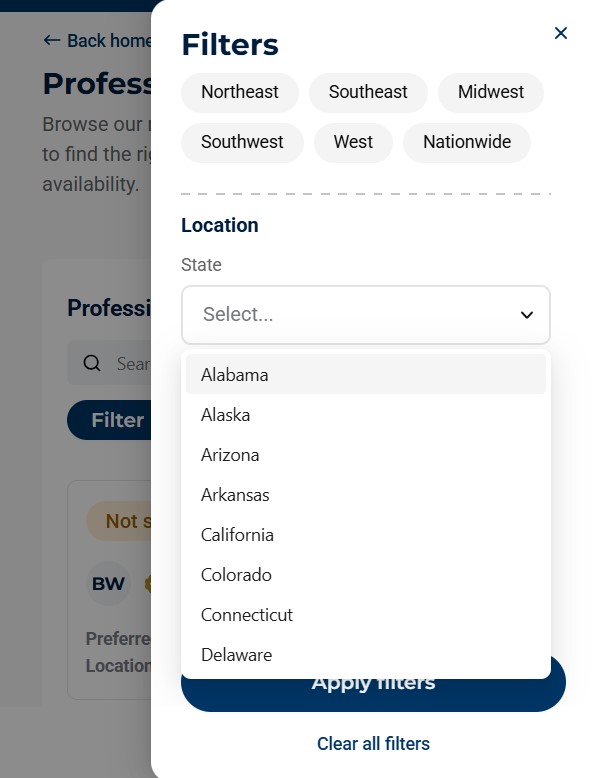
From Alabama to Wyoming, ARKLA profiles are visible to providers nationwide. Pick your state to see opportunities and the providers active there.
Contract, traveling and per diem inspector work
Most pipeline inspector contract jobs run for the length of a project, from a few weeks to a full season. Traveling pipeline inspector jobs often pay a day rate plus per diem. Add your travel range and availability date to your ARKLA profile so providers hiring now can find you. Entry level pipeline inspector jobs exist too, often as utility or helper inspector roles under a chief inspector.
How to start and grow a pipeline inspection career
Most pipeline inspection jobs go to people who already know the field. Welders, coating applicators, NDT technicians and construction hands make the strongest inspectors because they have seen the work up close.
A common path runs in four steps. First, build two to three years in a related trade. Second, earn a core credential such as API 1169, AWS CWI or AMPP CIP Level 1. Third, take utility or helper inspector roles to log pipeline project hours. Fourth, move into lead, assistant chief and chief pipeline inspector jobs as your project list grows.
Keep a simple record of every project: operator, spread, pipe size, miles and your role. Providers ask for it, and it turns into your strongest resume section. ARKLA’s AI resume builder formats that history for you, so your profile is ready when new pipeline inspection jobs open.
How ARKLA helps pipeline inspectors get hired
ARKLA replaces word-of-mouth hiring with a verified, searchable profile. List your API, AWS, AMPP and ASNT credentials once, and energy providers can filter for them. The AI resume builder turns your project history into a clean inspector resume in minutes. Message providers directly when a spread is staffing up.
Join ARKLA Integrity United
where integrity meets opportunity.
Frequently Asked Questions
How do I become a pipeline inspector?
Most start in a related trade, such as welding, coating or NDT, then earn API 1169 or a CWI. Field experience on pipeline projects matters as much as the certificate.
Do pipeline inspection jobs require API 1169?
Many operators require it for construction inspector roles. Welding, coating and NDT roles use their own credentials instead.
Do pipeline inspector jobs include per diem?
Traveling contract roles usually include per diem on top of a day rate. Terms vary by provider and project.
Are there entry level pipeline inspector jobs?
Yes, but they are limited. Utility inspector and helper roles on a spread are the usual entry point.
How does ARKLA help me find pipeline inspection jobs?
ARKLA makes your verified profile and credentials searchable by energy providers across the USA. ARKLA does not guarantee placement.
What is the difference between a pipeline inspector and a QA/QC inspector?
A pipeline inspector watches construction activities in the field, while a QA/QC inspector focuses on documentation, material traceability and quality records. On many projects the roles overlap, and experienced inspectors often hold both responsibilities.
How long do pipeline inspection contracts usually last?
Most contracts follow the project schedule, from a few weeks for a station tie-in to several months for a mainline spread. Integrity dig programs can keep inspectors busy for a full season.
Which states have the most pipeline inspection jobs?
Texas usually leads, followed by states with active pipeline construction such as Louisiana, Pennsylvania, Ohio, West Virginia, Oklahoma, New Mexico and North Dakota. Demand shifts as new projects are approved.