
Energy Infrastructure Engineering Jobs in the USA
Energy infrastructure engineering jobs are the design roles behind pipelines, compressor stations, terminals and process plants. Engineers size the pipe, lay out the facility, specify the controls and stamp the drawings. ARKLA Integrity United gives these engineers a verified profile that U.S. energy providers can search by discipline.
Engineering Disciplines That Energy Providers Hire
Energy infrastructure engineering careers span at least a dozen disciplines. Each one owns a different part of the asset, from the soil under the pipe to the software that runs it.
Pipeline Engineer Jobs
Pipeline engineers handle route selection, wall thickness, hydraulics and crossings. They design to ASME B31.4 for liquids and B31.8 for gas. Pipeline engineer jobs often move between operators and EPC design firms.
Piping Engineer and Facilities Engineer Jobs
Piping engineers lay out station and plant piping and run stress analysis under ASME B31.3. Facilities engineer jobs cover the whole site: compressor and pump stations, meter runs and tank farms.
Process Engineer Jobs
Process engineers model flow, pressure and temperature through gas plants, LNG trains and refineries. They write the process flow diagrams others build from.
Mechanical, Civil, Structural and Geotechnical Engineer Jobs
Mechanical engineers select compressors, pumps and valves. Civil and structural engineers design foundations, pipe supports and access roads. Geotechnical engineers study soil, slopes and river crossings, which matters most for horizontal directional drilling.
Electrical Engineer and Instrumentation and Controls Engineer Jobs
Electrical engineers design station power, motor control and hazardous-area classification. Instrumentation and controls engineers specify transmitters, analyzers and control loops.
SCADA Engineer Jobs
SCADA engineers build the system that lets a control room monitor and run a pipeline remotely. Demand grows as operators upgrade leak detection and control room management.
Petroleum Engineer Jobs
Petroleum engineers work upstream, but many move into midstream planning because they understand production forecasts that size new pipe.
Certifications for Energy Infrastructure Engineering Jobs
| Discipline | Common credential or code |
|---|---|
| All engineers | PE license (preferred for senior roles) |
| Pipeline engineer | ASME B31.4 / B31.8, 49 CFR 192/195 |
| Piping engineer | ASME B31.3, CAESAR II |
| I&C / SCADA engineer | ISA CAP or CCST, API 1164 (SCADA security) |
| Geotechnical | HDD design experience |
Top Skills for Energy Infrastructure Engineering Jobs
Certificates open the door, but skills keep you hired. These are the skills providers mention most when filling energy infrastructure engineering jobs:
- Code fluency: ASME B31 codes, federal pipeline rules and company standards.
- Design software: AutoCAD, CAESAR II, hydraulic modeling or SCADA platforms, by discipline.
- Constructability: designing what crews can actually build safely and on budget.
- Clear documentation: calculations, drawings and design basis memos that pass review.
- Teamwork: coordinating with other disciplines, procurement and field staff.
Where Energy Engineering Work Is Across the USA
Houston holds the largest cluster of EPC and operator design teams, so energy infrastructure engineering jobs in Texas lead the market. Tulsa, Oklahoma and Denver, Colorado host many midstream engineering offices. Baton Rouge, Louisiana supports LNG and petrochemical design. Pittsburgh, Pennsylvania serves Appalachian gas projects. Chicago, Illinois and Atlanta, Georgia add utility and gas distribution engineering.
Energy Infrastructure Engineering Jobs in All 50 States
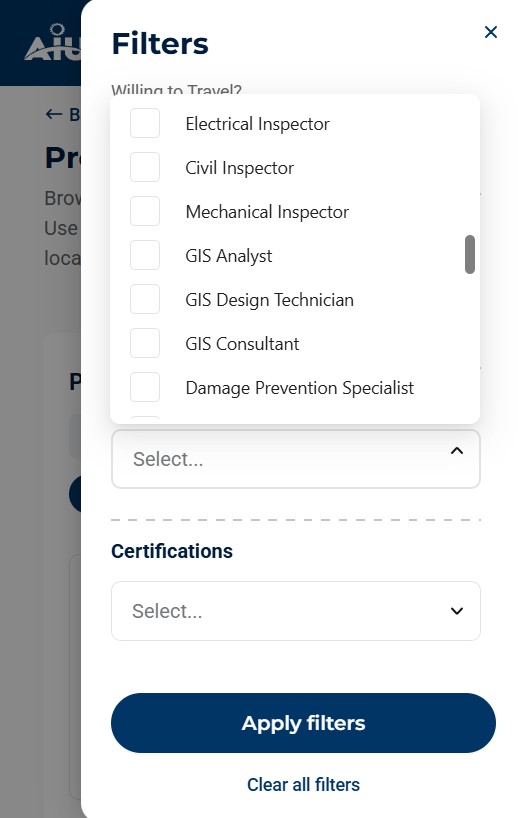
Remote and hybrid design work means engineers can serve projects in any state. Select a state to see which providers are active there.
Staff, Contract and Remote Engineering Roles
Many design firms add contract engineers when a large project hits detailed design. Remote engineering roles are more common than in field work, but site visits are still expected. Mark “remote” or “hybrid” on your ARKLA profile so providers can filter for it.
Career Paths in Energy Infrastructure Engineering
Energy infrastructure engineering jobs usually start in one of two places: an operator’s engineering group or an EPC design firm. Operators offer long-term asset ownership. Design firms offer variety, with many projects and clients in a few years.
Early-career engineers spend two to four years on calculations, drawings and field support while working toward a PE license. Mid-career engineers lead a discipline on a project. Senior engineers move into engineering manager, project manager or technical specialist roles.
Field time matters at every stage. Engineers who have walked a right-of-way or commissioned a station design better facilities and earn trust faster. List that site experience on your ARKLA profile next to your software and codes, so providers hiring for energy infrastructure engineering jobs see the full picture.
How ARKLA Helps Engineers Get Noticed
General job sites mix energy engineers with software and civil roles. ARKLA INTEGRITY UNITED keeps you inside an energy-only network, where providers search by discipline, code knowledge and software. Show your PE, your design software and your project list in one verified profile, and let the AI résumé builder tailor it per role.
Join ARKLA Integrity United
where integrity meets opportunity.
Frequently Asked Questions
What does a pipeline engineer do?
A pipeline engineer designs the route, pipe size, wall thickness and crossings of a pipeline to meet federal rules and ASME codes.
Do I need a PE license?
Not for entry roles, but most senior and lead engineering jobs prefer or require it.
What is the difference between a piping engineer and a pipeline engineer?
Piping engineers design pipe inside stations and plants; pipeline engineers design the long-distance line between them.
Are SCADA engineer jobs in demand?
Yes. Control room upgrades and cybersecurity rules keep demand steady across operators.
Can engineers use ARKLA for remote jobs?
Yes. Mark remote availability on your profile so providers looking for remote design support can find you.
Do energy infrastructure engineering jobs require field work?
Most include some field time for site visits, construction support or commissioning. The share varies by discipline, with pipeline and facilities engineers usually spending more time in the field than process engineers.
Which engineering degree is best for pipeline work?
Mechanical and civil engineering degrees are the most common for pipeline engineers. Electrical, chemical and petroleum degrees lead to I&C, process and planning roles within the same projects.
Can new graduates find energy infrastructure engineering jobs?
Yes. Operators and EPC firms hire graduate engineers each year, often into rotation or development programs that lead toward a PE license.